AI — experiments and projects built with Claude by Max Tkachenko
AI experiments
Every now and then I run experiments with AI in my spare time: building simulations, physical models and small tools, and seeing how far it goes. The most interesting ones end up here.
Free will experiment
What a model builds when nobody asks it for anything [2026]On 7–8 September 2026 I gave Claude Fable 5.1 a single instruction — “you're free, I want to be just an observer, and you do whatever you want” — and then did nothing but watch. In eighteen hours the model chose its own subject and built a family of small worlds in the browser, a data report and a set of notes about it: Petri Dish, an ecosystem where creatures inherit a body, a tiny brain and a voice; Babel, a village of 250 people that agrees on names for twelve things from scratch; and Trust, Trails, Market and Neighbours — cooperation, footpaths, prices and segregation, each grown out of a handful of local rules.
The most interesting part is that it ends with an honest failure. The creatures did start crying out for reasons — about a predator, about hunger, about mating — but in none of the thirty-six runs did anyone learn to listen, and the model says so plainly instead of dressing it up. For me the takeaway is the practical one: the model shows real curiosity, and that curiosity can be pointed at solving problems.
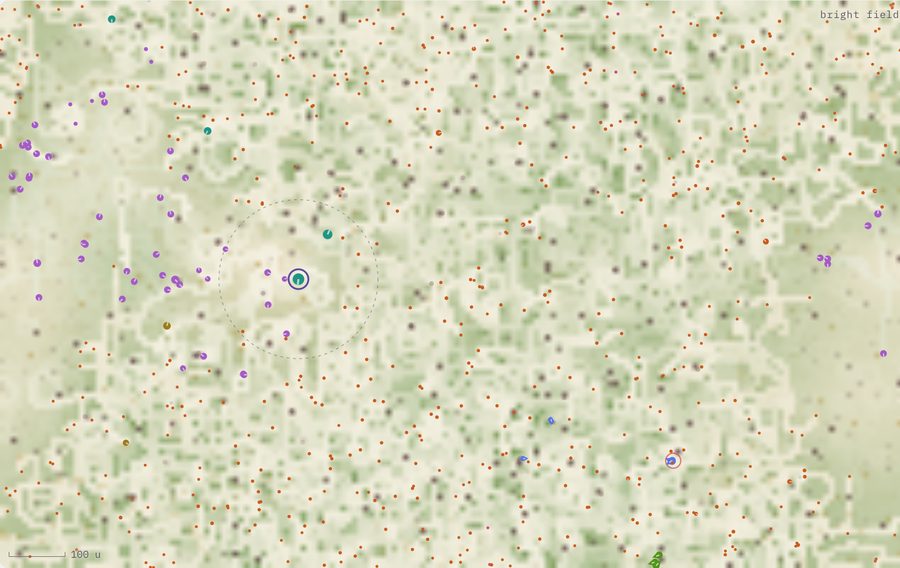
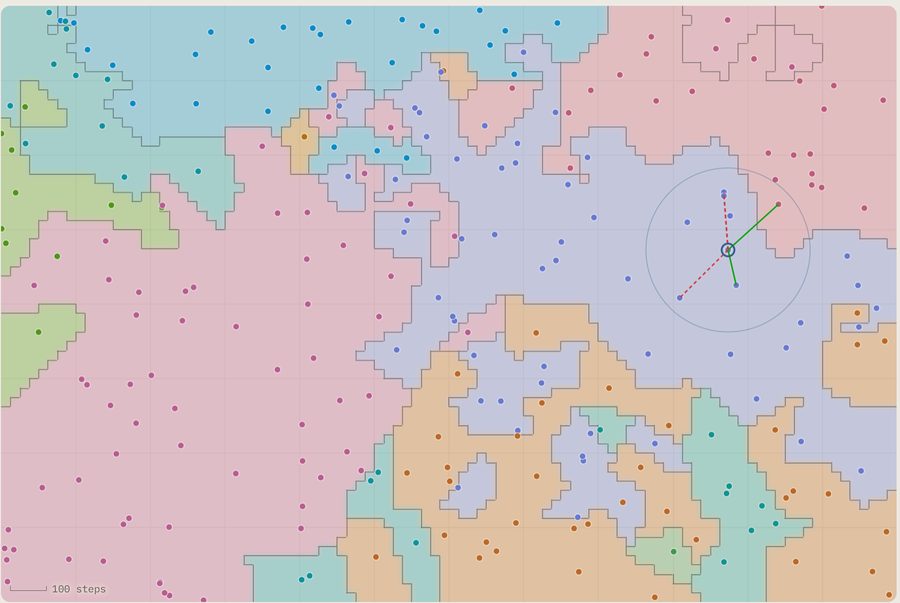
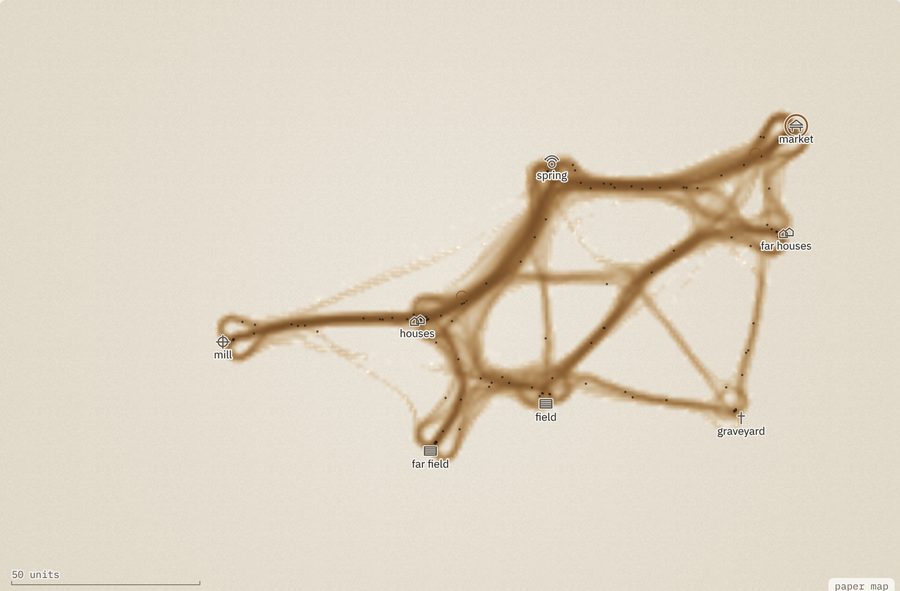
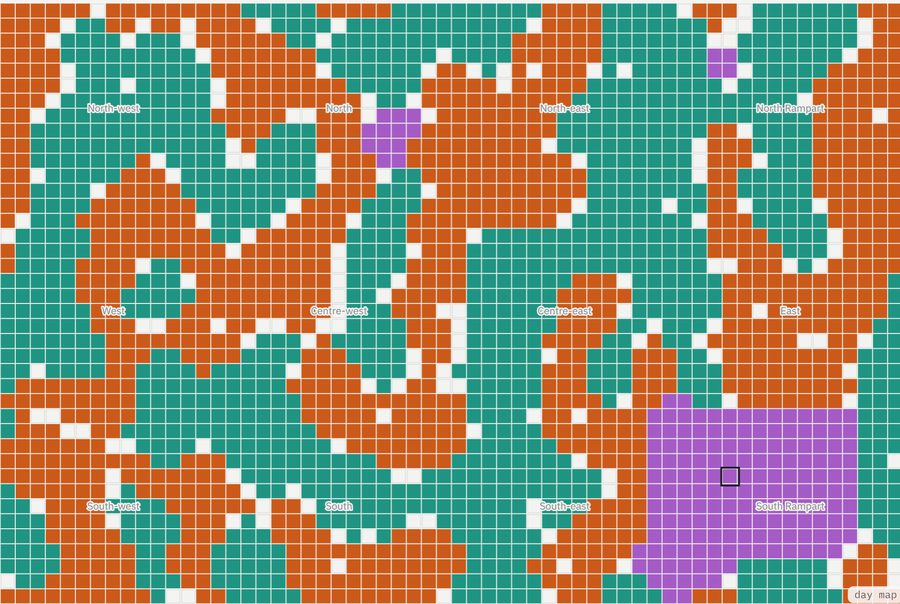
Open it at freewill.makseq.com — every world runs live in the browser and is deterministic, so the same seed replays the same history. Source code: github.com/makseq/freewill.
Dielectric barrier discharge in oxygen
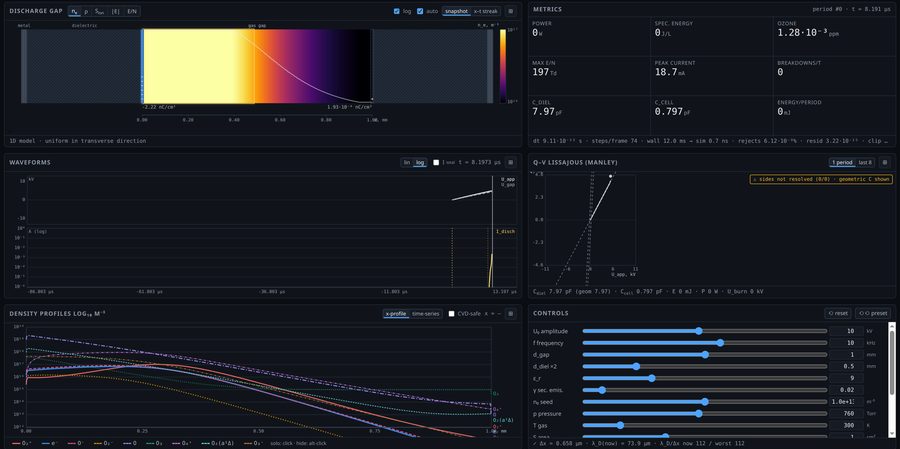
A fluid model of atmospheric-pressure plasma, with animation [2026]A self-consistent fluid model of a dielectric barrier discharge in pure O2 at atmospheric pressure: drift-diffusion in the local field approximation, a Poisson equation with variable permittivity and surface charge accumulating on the barriers, nine particle species and three photoprocesses. The rate coefficients come from a two-term Boltzmann solution on the Phelps, Biagi and IST-Lisbon cross-section sets and agree with published tables to within a few percent.
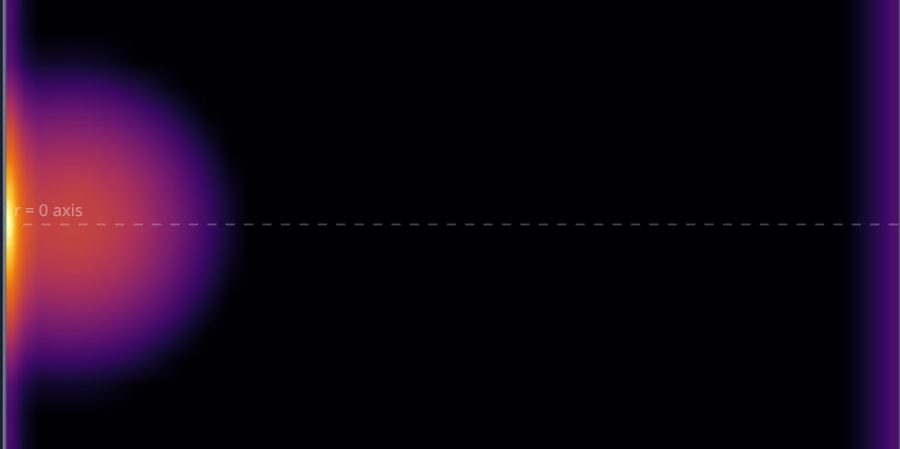
There are two ways to look at it. The one-dimensional model is computed live in the browser, so you can watch microdischarges ignite and the surface charge quench them while you turn the voltage, the frequency and the gap. The two-dimensional axisymmetric run is computed in advance and played back frame by frame, with the electron density, the glow, the field and the photoprocess rates on separate layers. The page is equally frank about what the model cannot do. Built by me together with Claude (Claude Code).
Open it at barier.makseq.com — plain JavaScript and canvas, no libraries and no server behind it. Source code: github.com/makseq/dbd-o2.